

Intelligent protection against the winter cold
Winter thermal insulation in the interior: energy-efficient solutions with functional colours
Winter thermal insulation is a central component of energy-efficient building planning. The aim is to minimize heat loss in the cold season, reduce heating energy requirements and at the same time ensure a high level of thermal comfort indoors. In addition to insulation, windows and heating technology, interior measures are becoming increasingly important. One such measure is the use of modern functional paints for interiors.
Definition and building physics context
Winter thermal insulation refers to all structural and material-related measures that reduce heat loss from heated rooms. It is not only the U-values of the building components that are decisive here, but also the interaction of surface temperatures, air movement and moisture behavior in the interior.
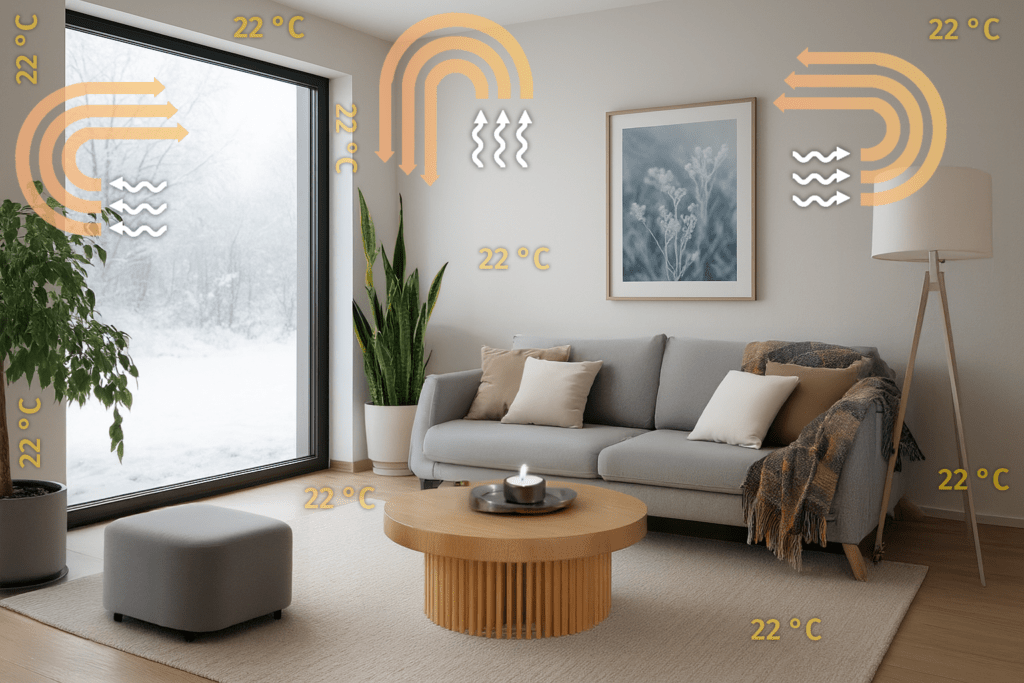
Cold wall surfaces lead to convection currents, an increased heating requirement and a subjectively cooler room feeling, even if the room air temperature is sufficient. Winter thermal insulation therefore aims to achieve an even temperature distribution and reduce thermal imbalances.
Interior wall paints as part of the thermal insulation concept
The surfaces of interior walls have a significant influence on the heat balance of a room. Conventional emulsion paints have hardly any heat-regulating properties. Energy-efficient functional paints such as ThermoPlus from ClimateCoating® use physical effects to retain heat in the room and release it again in a controlled manner.
The reflective membrane technology used is based on micro-fine, vacuumized hollow structures. After application, these form a continuous, heat-reflecting layer. This membrane stores thermal energy from heating systems or solar gains and reflects it back into the room with a time delay.
Improving thermal comfort in winter
By storing and evenly releasing heat, the average surface temperature of the walls increases. This reduces convection currents on cold surfaces and compensates for temperature differences between the floor and ceiling areas. The result is significantly improved thermal comfort, as people react not only to the air temperature but also to the radiant temperatures.
In practice, this effect can significantly reduce heating energy requirements. Under real conditions of use, heating energy savings of up to 30 % are possible without the need for additional technical systems or structural interventions.
Moisture regulation as part of winter thermal insulation
Another important aspect is the humidity behavior of indoor spaces. Dry heated air in winter often leads to discomfort, increased dust levels and stress on the respiratory tract. At the same time, cold wall surfaces promote local moisture accumulation and mold growth.
Functional colors like ThermoPlus are open to diffusion and moisture-regulating. They temporarily absorb excess humidity and release it again when the room air is dry. This stabilizes the relative humidity at around 55%, which is considered optimal from a building physics and hygiene perspective. At the same time, the formation of condensation on wall surfaces is reduced.
Sustainable thermal insulation without additional energy
In contrast to active heating or ventilation systems, the functional color works purely passively. The winter thermal insulation is created solely by the material properties and physical principles of action. This makes ThermoPlus particularly interesting for use in existing buildings, homes, offices and public facilities where structural measures are only possible to a limited extent.
In addition, durable, anti-electrostatic surfaces help to reduce soiling and extend renovation intervals. This not only saves energy, but also reduces the consumption of resources in the long term.
 Conclusion: Functional colours as a clever addition to thermal insulation
The thermal insulation of modern buildings in winter requires a holistic understanding of building physics and indoor climate. Energy-efficient interior wall paints such as ThermoPlus are an effective addition to classic insulation measures. Thanks to heat storage, even heat release and moisture regulation, they improve both energy efficiency and the quality of indoor living.
Functional colours thus make an important contribution to sustainable building, reduced energy consumption and healthy living – especially in times of rising heating costs and growing demands for climate protection.


