Effectively prevent mould in winter
Root cause analysis and prevention with functional colours
Mould growth in living and working spaces occurs mainly in the autumn and winter months. Even with regular heating, traces of moisture or mould stains can appear on walls, ceilings and corners of rooms. The causes are mainly to be found in the physical relationships between surface temperatures, room humidity and thermal bridges. A sound understanding of these factors is crucial in order to prevent mould effectively and sustainably – also with the help of wall paint.
Physical causes of mould formation
One of the main causes of mould growth are thermal bridges that occur during the construction phase. Uninsulated corners, connections to windows or roofs and cracks in the construction lead to lower surface temperatures locally. At these points, the temperature can fall below the dew point of the room air, causing moisture to condense – creating ideal conditions for mould.
Other causes are:
- cracks in the façade or defective roofs
- lack of protection from rain
- rising damp in masonry
- insufficient drying out after construction work
- insufficient air circulation due to tightly closed windows and doors
- improper heating and ventilation
Older, dirty or chalky paintwork, highly absorbent textured plaster and organic deposits also encourage the initial colonization of mould spores. In such cases, a mold-inhibiting paint can help to reduce the formation of new mould.
Moisture in the room – the main driver for mould
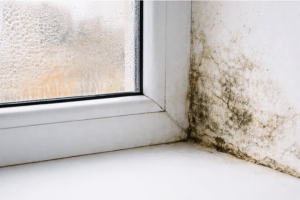 The most common practical cause of mould growth is locally increased air or wall humidity. Such moisture peaks can be caused by inadequate ventilation, incorrect heating, tight building envelopes or modernization, such as replacing old windows with new plastic windows without adapting the ventilation concept.
Moisture from the masonry that has not been sufficiently drained away in new buildings or after water damage can also promote mould growth. Cold surfaces encourage condensation, as the wall temperature falls below the dew point of the room air. Short-term peaks in humidity, e.g. when showering, cooking or drying laundry, can cause localized condensation, especially in poorly ventilated or cool areas.
To prevent mould, the relative humidity in the room should not exceed 65-70% and a maximum of 80% directly on the walls. These values can be achieved by regular, short and intensive ventilation several times a day. Cross-ventilation is particularly effective, where humid room air is exchanged for dry fresh air within a few minutes. The right combination of ventilation, controlled room temperature and humidity regulation can create a healthy indoor climate that prevents the formation of new mould in the long term.
Air circulation and practical prevention
 If there are no serious structural defects such as a leaking roof or massive moisture ingress, mould can be effectively prevented with simple measures:
- place furniture at a distance from the outer wall
- avoid thick, floor-to-ceiling curtains
- shock or cross ventilation
- air the bedroom in the morning after getting up
- do not allow rooms that are rarely used to cool down completely
- ventilate intensively after bathing or showering
- maintain ventilation systems regularly: clean filters every 2-3 months, replace annually
- empty and clean waste garbage cans regularly
Measures for drying masonry and regulating moisture
For sustainable mould prevention, it is crucial to dry the walls thoroughly. Moisture in masonry can come both from an inadequately dried new building and from water damage, for example from burst pipes. Mineral products such as IsoTex R70 from ClimateCoating® for interior and exterior areas remove excess moisture from the masonry, equalize surface temperatures and reduce thermal stress.
ThermoVital supplements this effect by actively regulating the humidity in the room. Excess moisture is temporarily absorbed and released again in a controlled manner when the air is dry. This stabilizes the indoor climate, prevents condensation at certain points and reduces the risk of mould in the long term. The combination of insulation, drying and moisture buffering offers a holistic solution.
Mould removal and long-term prevention
Visible mould stains on walls and ceilings are a clear warning sign of local moisture problems. Mould grows where moisture and nutrients are present. Temperature and pH value play a subordinate role. Black or brown stains and white mould fluff must be treated quickly and specifically.
Systematic mould removal is carried out in several steps:
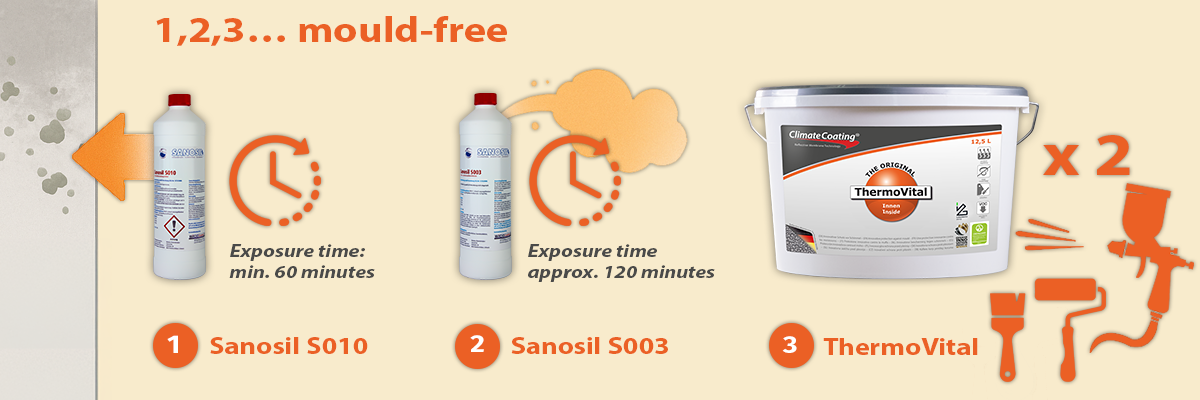
- Treat affected areas: treat mould stains with undiluted Sanosil S010 approx. 5-10 cm beyond the edges while wearing a respirator. The dead mould components must then be removed from the surface by thorough washing, brushing or rubbing. Ideally, a plastic brush should be used in combination with warm water and a cleaning agent so that the dissolved mold components bind in the liquid and are not stirred up. Important: Do not brush off mold components dry and do not inhale.
- Treatment of room air and possible secondary contamination: with Sanosil S003 furniture can remain in the room. After removal of infested wall coverings, a new treatment with Sanosil S010 while wearing a protective suit and respiratory protection. Important: After the second application with Sanosil S010 do not wash off the surface.
- Long-term prevention or already preventive: Application of the ThermoVital anti-mould paint, which regulates humidity, reduces localized condensation and effectively prevents new mould growth. The tintable dispersion enables individual colour design in over 100,000 shades for walls and ceilings
Effects on health
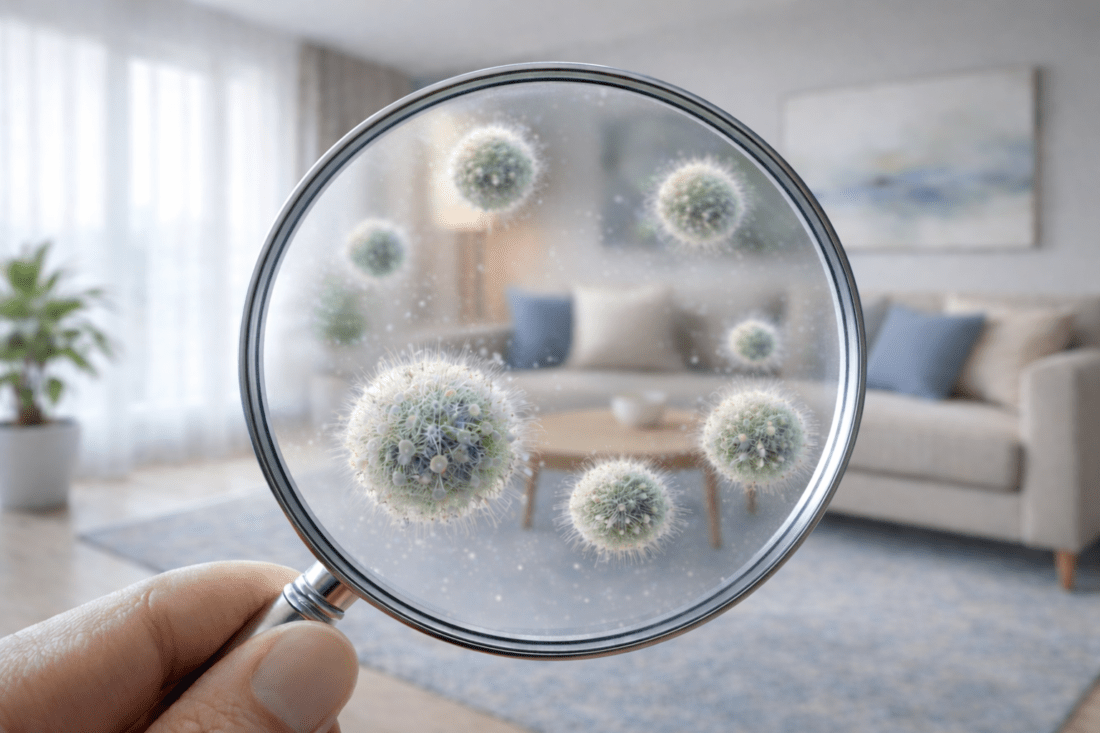
Mould indoors is not only a structural risk, but also a significant health risk. Moulds release spores and microbial metabolic products, including mycotoxins, which are absorbed through the air we breathe. This can lead to acute or chronic complaints, especially if you spend long periods of time in contaminated rooms.
 Typical signs of health problems caused by mould include:
- allergic reactions and allergy exacerbations
- respiratory complaints such as coughing, shortness of breath or bronchitis
- burning, reddened or watery eyes
- sore throat and irritation of the mucous membranes
- headaches, concentration problems and exhaustion
- skin rashes and fungal and skin infections
- digestive problems
- in severe or long-term cases, lung and cardiovascular diseases
Children, the elderly, asthmatics and people with weakened immune systems are particularly at risk. As the symptoms are often unspecific, mould contamination often remains undetected for a long time. This makes it all the more important to take the first signs of damp seriously and not only remove the visible mould, but also eliminate the causes in the long term.

Conclusion: Mould-free and healthy with ThermoVital
Products such as IsoText R70 in combination with the mould-inhibiting wall paint ThermoVital are extremely effective against mould: IsoText R70 balances surface temperatures and dries the masonry, while ThermoVital regulates the room humidity, prevents condensation at certain points and provides long-term protection against mould. The result is a healthy, comfortable and energy-efficient indoor climate – even in the cold season.
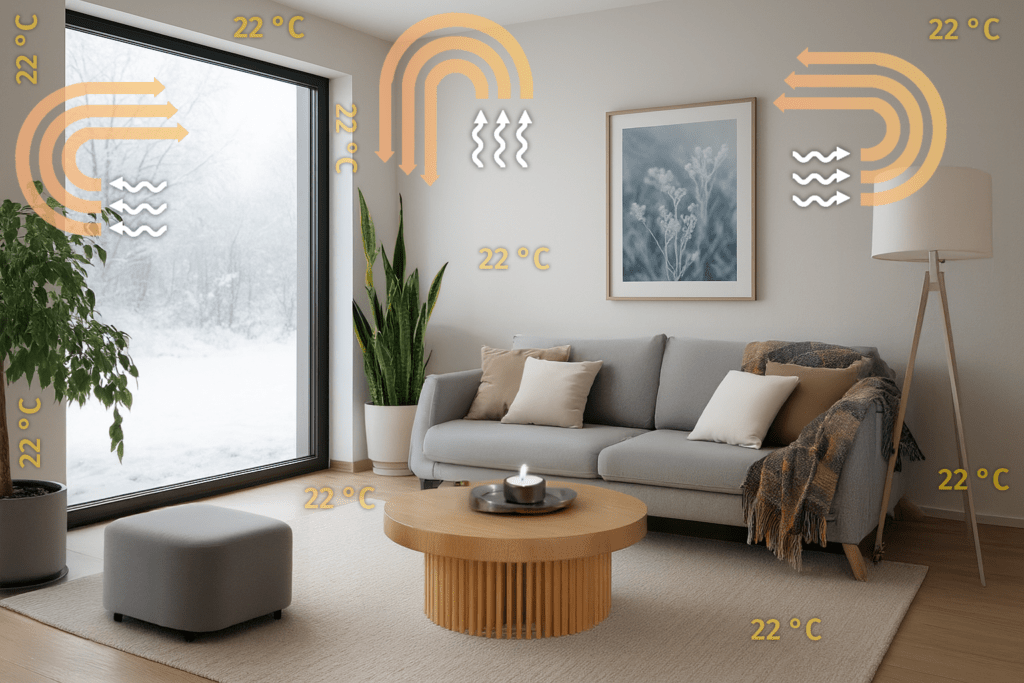
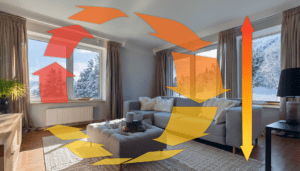
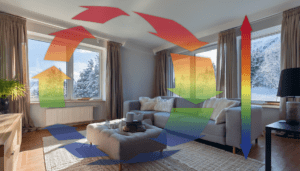 The temperature difference between warm and cold air also creates natural convection currents. Radiators make targeted use of this effect: they draw in cooler air near the floor, heat it at the heating surface and discharge it upwards as warm air. The air cools down again along undercooled wall and window surfaces, sinks downwards and thus increases the circulation. This creates noticeable air movement, which removes heat from the human body and significantly reduces the subjective sensation of warmth.
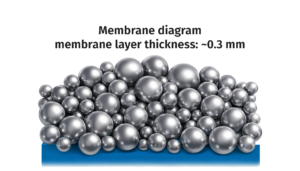 The
The 
 The combination of these active principles leads to a significant improvement in the indoor climate. By increasing surface temperatures, reducing convection currents and stabilizing humidity, thermal comfort increases significantly. At the same time, a more even distribution of heat between the ceiling and floor areas is achieved. This prevents unpleasant temperature differences and makes cold feet a thing of the past. Under real conditions of use, heating costs, electricity and energy can be saved by up to 30 % without the need for additional technical systems or structural interventions. This significantly increases the feel-good effect and reduces heating costs in the long term.