Renovations with Nature 02

Renovations with Nature

A facade renovation with ClimateCoating® Nature.

This practical report is from Holland, but also in Sweden, which is well known for its wooden houses, ClimateCoating® Nature has been successfully and beneficially used for years. The primary aim is to provide long-term protection for the wooden façades, while at the same time saving energy. As far as long-term protection is concerned, Nature is ahead of many stains, varnishes and glazes, as practical comparisons show.

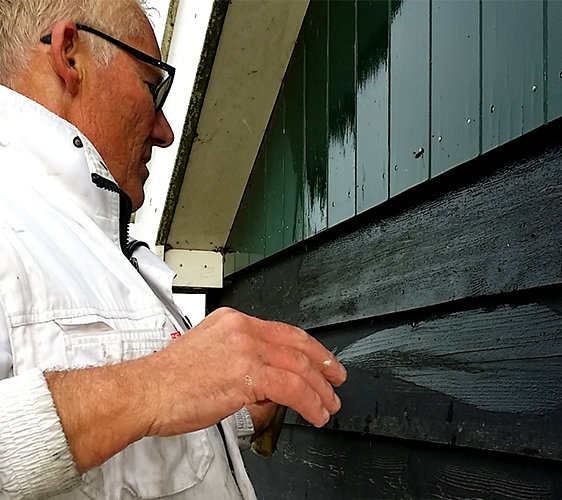
The application of ClimateCoating® Nature, e.g. on a wooden house, is no different from that of facade paints. The substrate must be dry, clean, load-bearing and free of grease, oil and wax. Load-bearing means: no loose paint residues or flakes. In addition, the substrate must be breathable, i.e. open to diffusion, so that the wall can “breathe out” water vapour. The photo report from Akersloot (NL) from 2015 shows how a wooden house painted with wood stain gets a renovation coat after three years.
Church in Blokzijl 01

Church in Blokzijl

Problem solving of salt contaminated walls by dehumidification with ClimateCoating® ThermoPlus.

The town of Blokzijl (NL-8356 approx. 1,400 inhabitants) belongs to the municipality of Steenwijkerland in the Netherlands, province of Overijssel. The baptismal * church has a year of construction around 1850. The massive walls of brickwork, clinker on the outside, plastered on the inside, have a moisture problem.

The walls are damp and contaminated with salt. A renovation took place in 1990. The result was unsatisfactory, the paint came off in many places after only 2 weeks. In the course of the 90s, the problems increased, cracks appeared and the colour peeling increased.

In 2001, a coating was applied with the product ClimateCoating® ThermoPlus (2x on the primer FixPlus, after removal of the chalking old coat). For this, the church council, with the approval of the monument authorities, commissioned the painting company Bergkamp from Blokzijl.

The result was impressive: by the end of 2003 (date of the information letter at the time), no new problems had occurred. ClimateCoating® ThermoPlus held stably on the walls and dehumidified them: Measurements proved a decrease from 85 to 62 units within 3 months.

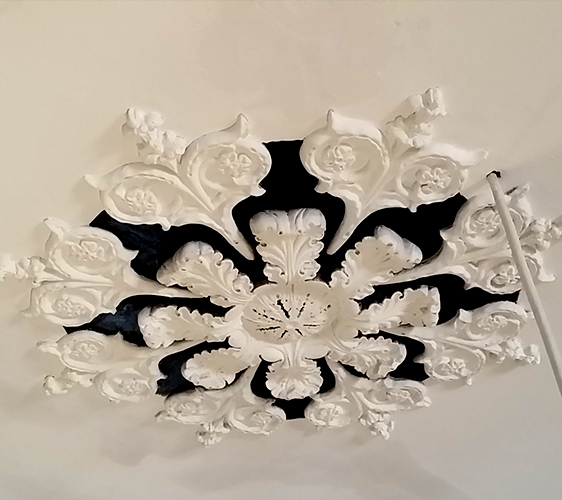
An inspection in 2014 showed that the durability of ClimateCoating® ThermoPlus is still given. Due to the good experience, in 2015 a large-scale interior coating was applied to the wall and ceiling surfaces that had been impaired after a leak on the roof.

Nature vs Colours 01

Nature vs Colors

Practical experience proves the advantages of ClimateCoating® Nature.

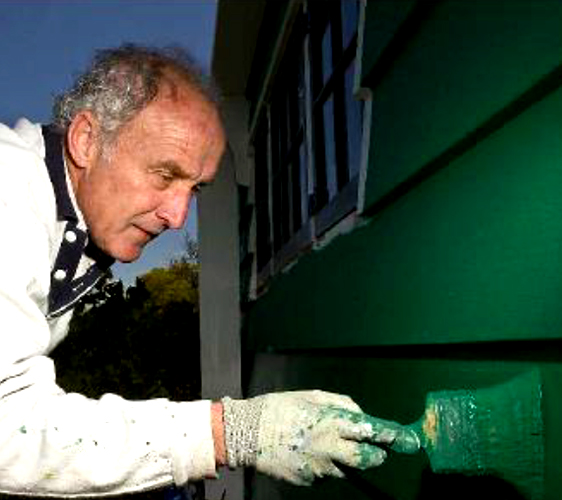
ClimateCoating® Nature, that is the paint for components made of wood. To be precise: for non-dimensional components made of wood. This means that ClimateCoating® is not suitable for windows and doors because the thermoceramic membrane cannot withstand the mechanical stresses in the rebate, and it is also not used on running surfaces.

ClimateCoating® Nature shows its strengths on all other wooden components: Protection against UV radiation, sunlight reflection, driving rain protection, reduced swelling and shrinkage, dehumidification, diffusion openness, crack bridging, permanent elasticity. The prime example is the original Black ClimateCoating® house in Holland: after 15 years, no cracks, no blisters. This example has already been followed by several in black.

There is no need to denigrate other products for wood, the comparison in practice provides a good basis for deciding for or against a product. Sometimes a few pictures say more than many words. You can choose ClimateCoating® Nature in thousands of colour shades. They apply it: for wooden houses, half-timbered houses, roof boxes, fences.

Nature for windmills 01

Nature for windmills

A facade renovation with ClimateCoating® Nature.

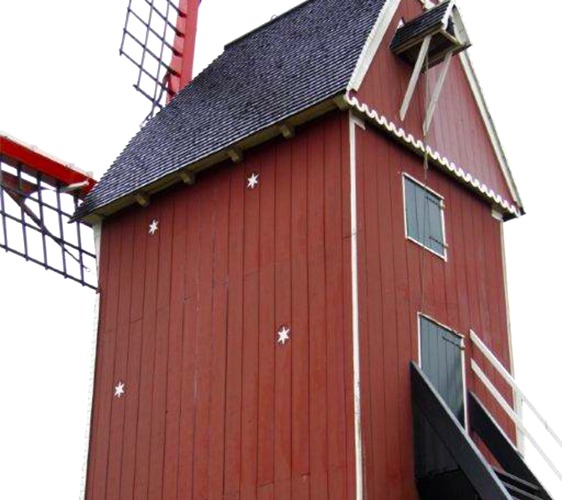
Holland – that is the canals in Amsterdam, cheese, bicycles. And windmills. Holland and its windmills are inseparable, they are one of the well-known symbols of the Netherlands. Dutch windmills appeared at the end of the 16th century, and there were 10,000 windmills in the Netherlands by the end of the 19th century.

Since the population has now shrunk to about 1,000, the preservation and maintenance of the existing windmills is important. ClimateCoating® Nature makes a good contribution to this. The good experiences with the Black ClimateCoating® houses provide the basis for the decision.