Wooden facades with Nature 01

Wooden facades with Nature

Protection from heat and UV, not only houses (black, burgundy, white).

Netherlands Nature reliably protects wooden houses
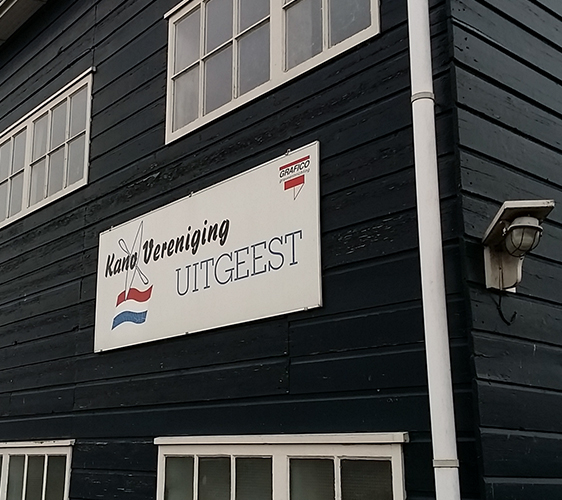
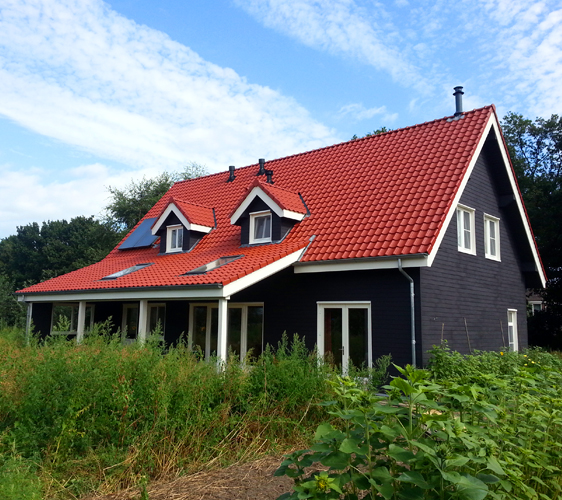
Painting wooden facades black seems to have become a tradition in the Netherlands. These examples have one thing in common: “Dit woonhuis is ClimateCoating® Nature toegepast. Na enkele jaren staat er nog in volle pracht bij.” (This house was painted with ClimateCoating® Nature. After a few years, it still looks great :).

However, this does not only apply to houses coated with ClimateCoating® Nature in Black, but also to other buildings. The Vechtstromen Water Board (formerly Regge & Dinkel) manages a beautiful nature reserve in Hengelo called Kristalbad. Here, ClimateCoating® Nature was chosen in 2014. After 3 years, the objects are still exceptionally well preserved, as if they had been treated only last month. The wood does not get as hot, which reduces thermal stress. There are therefore hardly any cracks.

This good experience with protection from sun heat and UV has also been made in Assendelft. The houses on the “Red Ring” are exposed to the sun all day. The wood suffers greatly from this. However, ClimateCoating® Nature offers reliable protection.

The house with the wine-red façade was painted with ClimateCoating® Nature and is finished here with ClimateCoating® GlossPlus.

This combination also acts as a UV blocker and also provides a silky gloss finish. With ClimateCoating® Nature, the heat protection of wooden houses is therefore not solely dependent on whether they are painted white or at least light-coloured. Dark shades such as wine red and black are also possible.
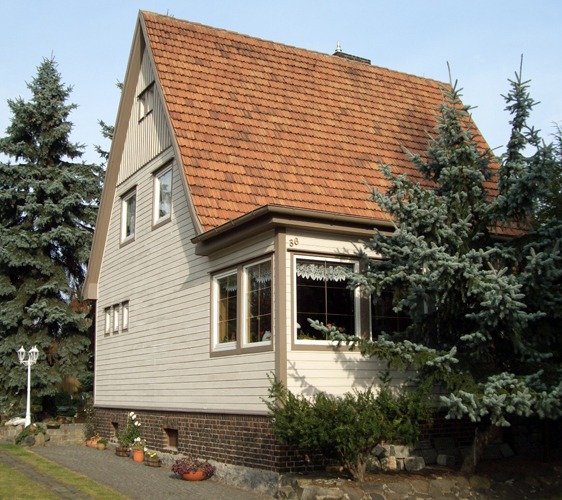
The white house in Spremberg 01

The white house in Spremberg

Durability, comparison to a glaze

The White House in Washington D.C. has not (yet) been coated with ClimateCoating®. This is a wooden house in Spremberg near Cottbus. The photos are from November 2005, the report from 2006. The coating was applied in September 2000, when the building was in a pitiful condition. The surface of the wood was already heavily attacked because it had been exposed to the weather for years without protection.

Mosses, fungi and lichens had settled on the damp ground. Therefore, a thorough pre-treatment of the substrate was necessary. By coating with ClimateCoating® a considerable renovation success could be achieved. The wooden parts were actively dehumidified so that the structure could solidify again. In addition to the attractive appearance, it can be noted that since the coating with ClimateCoating® no infestation with microorganisms such as algae, fungi, lichens or mosses has occurred.

For the homeowners, the investment has paid off in full, especially since everyone can see how much effort the neighbour has to put into maintaining his brown glazed house (on the left in the picture) year after year. At the White House, on the other hand, maintenance of the facade coated with ClimateCoating® is not yet necessary. When coated with ClimateCoating®, every fibre structure of the wood can be recognised, so that the natural impression is retained. Nevertheless, with 0.3 mm a long-term protection is given. The protection against microorganisms is practically toxin-free, which distinguishes ClimateCoating® strikingly from other facade coatings. It is not only economical in use, but also ecological. No re-coating has been required since September 2000. (03.01.2006).

In the meantime there is also a report from Holland: The white house in Spaarndam

Here even after black coating of a wooden facade amazing experiences were made: The black house in Holland

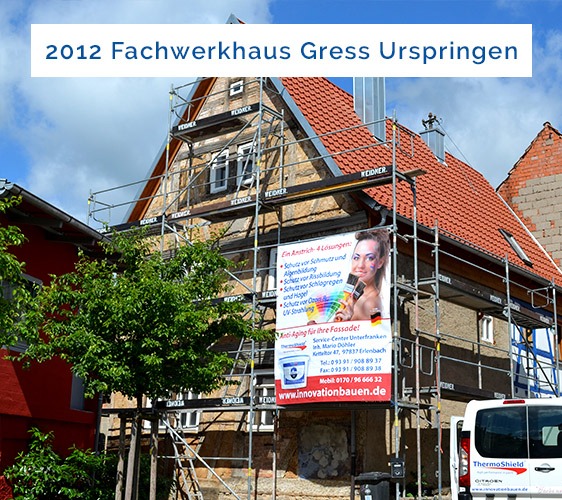
ClimateCoating® for half-timbered houses 01

ClimateCoating® for half-timbered houses

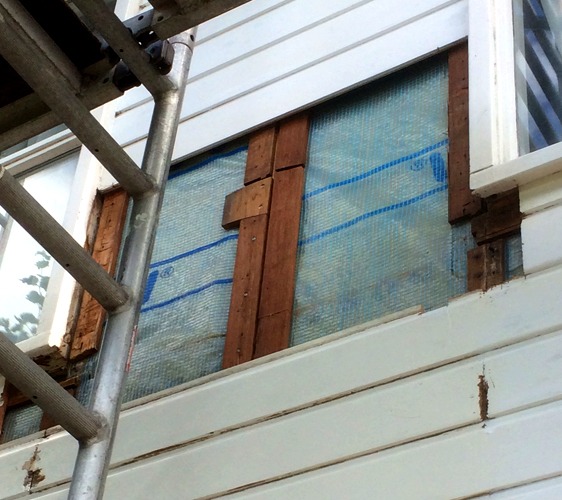
The photo collection on the theme of “half-timbered houses” shows shots from 2012 to 2015. The ClimateCoating® coating of the half-timbered houses was carried out in the combinations Exterior + Nature or History + Nature, Fix Plus or Nature Primer was used as a primer.

ClimateCoating® Nature for wooden components was developed to meet the special requirements of the oldest and most natural building material. Precisely because wood is so alive, it reacts sensitively to weather influences such as moisture, UV radiation, air pollution as well as fungi, pests and insects. That is why wood needs care and protection.

For historical buildings the product ClimateCoating® History is used. Almost every mineral substrate in old buildings is contaminated with water and salt. History fulfils the requirement of monument protection for a coating that is optimally open to capillary and diffusion, which should prevent salt and moisture build-up and also withstand all modern environmental stresses.

The combined application of the mentioned products for plaster and wood is the logical conclusion from the observed long-term performance on different facades and in different regions. The preventive advantage for half-timbered houses coated with ClimateCoating® is primarily the thermal calming and weather protection, especially against driving rain.

ClimateCoating® Nature strongly reduces the swelling and shrinkage of the wood. In addition, there is the excellent flank adhesion of both products – i.e. on wood and on plaster – as well as the crack-bridging, elastic properties of the ClimateCoating® membrane. This explains the very good suitability of ClimateCoating® for half-timbered facades.

The Black House in Holland 01

The Black House in Holland

The original type (2013: 15 years) was followed by others.

Years before there was any talk in professional circles about light coating and TSR values, a house was painted black with ClimateCoating®. “The Black House” in Holland was based on an idea by Jan de Lange. This is, so to speak, the archetype of the Black ClimateCoating® house. After 15 years in the real field test of outdoor weathering, Mr. van Leeuwen in 2013 a picture of the current state:

Although the paint has discolored after 15 years, it is still without cracks and bubbles. A single layer is now sufficient to restore the original image.

1998: This is the first object treated with ClimateCoating® in the Netherlands. The house and barns were protected by ClimateCoating® ThermoProtect. 2013: Today the paint is discolored and needs a refresh. This is done with ClimateCoating® Nature, which did not exist at that time.

This forefather of the Black ClimateCoating® House was followed over the years by others, not only in Holland and not only made of wood. In 1998 ClimateCoating® was still imported from the USA, since 2003 production has been “made in Germany” at the Berlin site. After many years of research and development, SICC has developed Nature, the special ClimateCoating® for wooden building components, from the tried and tested façade coating.

The white house in Spaarndam 01

The white house in Spaarndam

ClimateCoating® Nature compared to other products

No, it is not a second residence of the American president, nor is the comparison to be made with the original in Washington. Rather, the reference is to the pioneer of wooden house coating, which was reported in 2006 from Spremberg near Cottbus.

The object is a detached house in 2064 KW Spaarndam (NL), Lagedijk. It is located in open terrain in close proximity to the water. The orientation of the façade to the south results in a longer exposure also to sunlight. The lack of neighbouring buildings contributes to the fact that the house is also exposed to the wind.

The Meranti façade was thoroughly renovated 4 years ago. Since the old coating was in very poor condition, it was completely removed at that time. After some minor repairs, a double coat of primer was applied and then painted with satin varnish from S.

After only 4 years, it became apparent that renovation was again necessary due to weathering. In addition to the renewal of the coating, it also became apparent that some repairs had to be carried out again. The old paint had bubbles at the tongue and groove joints of the panel joints and some panels were defective.

Consideration of the alternatives revealed that repeating the same treatment would have been a costly affair; high labour and material costs would have been offset by a fairly short service life. Replacing the wooden panels with plastic parts would have required an investment of about EUR 4.5 to 5 thousand. The application of ClimateCoating® provides many years of protection.

Ultimately, the owner opted for option 3: the application of a ClimateCoating® coating. After the repairs and sanding of the old coating, ClimateCoating® Nature was applied twice. Afterwards, ClimateCoating® GlossPlus, a colorless protective coating, was applied.

The following experiences were made: In addition to various compliments from residents about the visible results, it was felt in the house that some things had changed. As a rule, the temperature in the house at the end of a sunny day is very high, especially in the bedroom behind this facade. After applying ClimateCoating® Nature, the first sunny days showed that the temperature in the house was 5-6 degrees Celsius lower than before.

Interesting to know:
in Holland good experiences have also been made with coatings in black.

learn more

Fraternity house in Erlangen 01

Fraternity house in Erlangen

Applications on various building components in coordination between architect and monument authority

ClimateCoating in the preservation of listed buildings
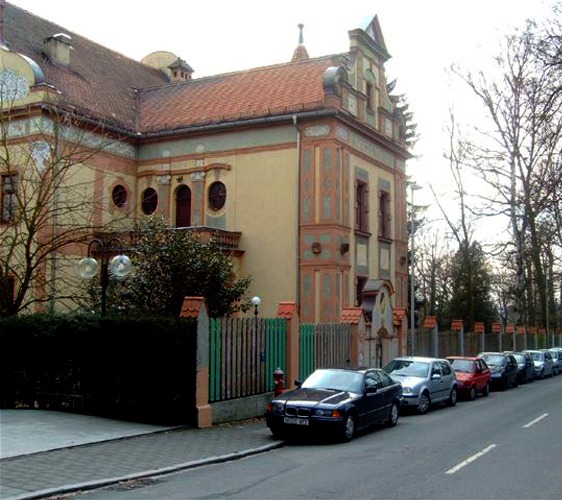
In 2005, ClimateCoating was applied to the Corps Baruthia fraternity house in Erlangen, Rathsberger Str. 20, in consultation with the monument preservation authorities: History on the plinth and wall plaster, ThermoActive on sheet metal parts and roof tiles, Nature on the wooden fence.