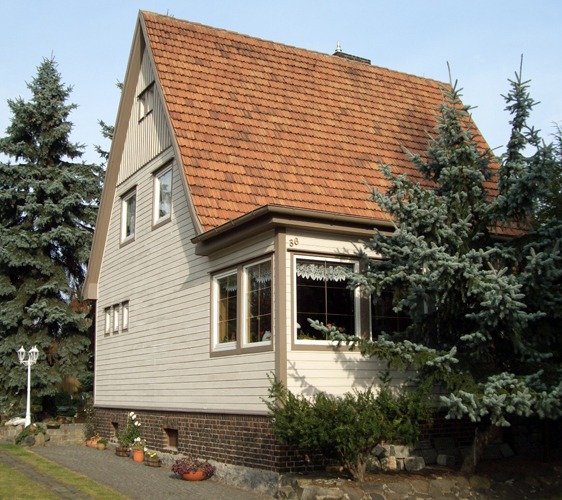
Wooden facades with Nature 01

Wooden facades with Nature

Protection from heat and UV, not only houses (black, burgundy, white).

Netherlands Nature reliably protects wooden houses
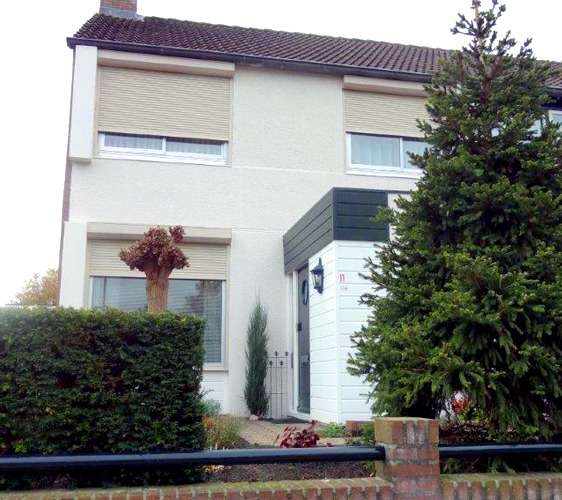
Painting wooden facades black seems to have become a tradition in the Netherlands. These examples have one thing in common: “Dit woonhuis is ClimateCoating® Nature toegepast. Na enkele jaren staat er nog in volle pracht bij.” (This house was painted with ClimateCoating® Nature. After a few years, it still looks great :).

However, this does not only apply to houses coated with ClimateCoating® Nature in Black, but also to other buildings. The Vechtstromen Water Board (formerly Regge & Dinkel) manages a beautiful nature reserve in Hengelo called Kristalbad. Here, ClimateCoating® Nature was chosen in 2014. After 3 years, the objects are still exceptionally well preserved, as if they had been treated only last month. The wood does not get as hot, which reduces thermal stress. There are therefore hardly any cracks.

This good experience with protection from sun heat and UV has also been made in Assendelft. The houses on the “Red Ring” are exposed to the sun all day. The wood suffers greatly from this. However, ClimateCoating® Nature offers reliable protection.

The house with the wine-red façade was painted with ClimateCoating® Nature and is finished here with ClimateCoating® GlossPlus.

This combination also acts as a UV blocker and also provides a silky gloss finish. With ClimateCoating® Nature, the heat protection of wooden houses is therefore not solely dependent on whether they are painted white or at least light-coloured. Dark shades such as wine red and black are also possible.

Washing gravel facade 04

Washing gravel facade

Summer and winter thermal insulation

This house is one of the first residential buildings in Rosmalen (Den Bosch, The Netherlands. The solid facade with washed gravel offers little resistance to the penetrating solar heat in summer and during the heating season a lot of heat escapes from the house. In November 2016, the facade was painted with ClimateCoating® ThermoProtect.
The result is satisfactory:
During the cold winter nights, the room temperature almost does not drop, even with the thermostat set lower. In the morning the room temperature is quickly brought to over 20°C. Even if the emirics are not more precise here, this example also shows that ClimateCoating® on the facade is able to keep the heat in the house.

Single family house in Erlenbach 01

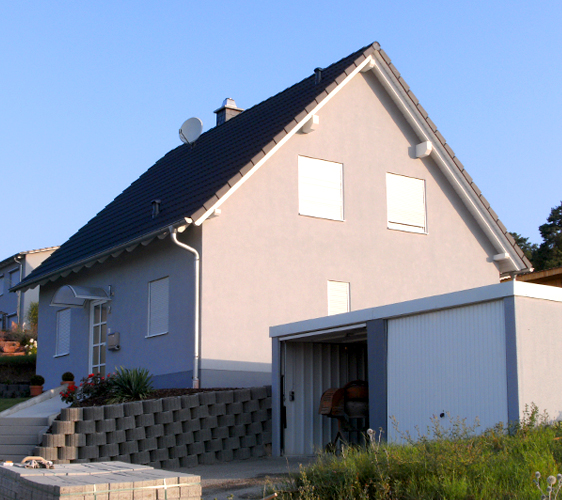
Single family house in Erlenbach

In this single-family house, the combination of solid construction with ClimateCoating® ThermoProtect and infrared heating with ClimateCoating® ThermoPlus ensures lower energy consumption than in the neighbouring house with a “better” U-value.

It is a single-family house. The wall construction consists of 24 cm porous concrete, inside and outside a total of 3.0 cm plaster and inside and outside coated with Thermo-Shield (i.e. outside with ClimateCoating® ThermoProtect and inside with Thermo-Shield Interior).

Heating is provided by IR (infrared) radiant panels, which consume primary energy-devil electric power and provide better thermal comfort than any convection heating can.

The infrared heating installed here, in combination with the IR reflective coating ClimateCoating®, creates maximum comfort and economy. For the period from March 2008 to March 2010, heating costs of less than € 450 p.a. have been verified.

At the same time, the evaluation of the measurement results leads the U-value theory ad absurdum. It is analytically and metrologically proven that the so-called U-value as a primary measure for the heating energy demand is a fantasy product.

The basis for the evaluation is a protocol from 2011 on measurements of the U-value of exterior walls of several single-family houses with different wall constructions. The measurements carried out prove the positive influence of Thermo-Shield Interior and ClimateCoating® ThermoProtect on the thermal resistance of exterior walls.

The task of the measurements was to prove the positive influence of ClimateCoating® on exterior walls with different wall constructions. Furthermore, the cooling behaviour as well as the warm-up phase of the air and the wall temperature should be determined.

The measurement locations were 2 single-family houses with different wall constructions. Measurements were taken on the west side of the house at a height of approx. 3-5m. All measurements were subject to largely the same conditions with a temperature difference between inside and outside of approx. 15°C. On the one hand, the TESTO 635 measuring device and the PT100 sensors were used. The wall structure of the neighbouring house consists of 36.5 cm aerated concrete, the U-value here is on average 0.30 W/m²K, as the manufacturer also specifies in his flyer.

From 20.02.2010 17:30 o’clock to 21.02.2010 9:00 o’clock different measured variables were measured in the room and outside:

  • – Indoor air temperature
  • – Air temperature outside
  • – Wall surface temperature inside
  • – “the U-value”
  • – rh [%]; probably the rel. Humidity outside
  • – Mat [%],the material moisture at unknown location

Here, among other things, one must ask the question as follows: What is being measured? Is it really the room air temperature? The wall surface temperatures rise because the IR heater emits heat radiation. In addition to the primary radiation, the secondary radiation also has an effect. This is the reason why even concealed wall surfaces that are not in the direct cone of the heater, e.g. behind an armchair, become warmer.

The sensor for the room air temperature therefore does not display the actual measured variable, but a higher value. This is because it is radiated in the same way and thus heated.

When it comes to radiation processes, the U-value theory is out of place. It merely adds to the confusion and dilution rather than providing a model explanatory contribution. This is because radiation processes are foreign to the nature of the U-value theory.

The room air temperature is not the determining variable when it comes to IR processes. This involves radiation physics in the wavelength range around 10 µm in the following cases:

  • – surfaces coated with thermoceramic membrane technology (IR reflection)
  • – Heating with heating systems based on the principle of heat radiation (IR heating)
  • – the combination of IR heating and IR reflective coating

By combining the IR heating with the ClimateCoating® coating, the occupants of the single-family house in Erlenbach achieved a high degree of energy efficiency as a result of comfort (higher surface temperatures, more temperature symmetry), faster heat-up, delayed cool-down – all with a “worse” U-value than the neighboring house.

Since 2015 you can read at www.thermoshield-farben.de: “For the period March 2008 to March 2014 heating costs below 450 € p.a. are proven. Compared to a passive house according to EnEV2009. 30% less heating costs, 20% less construction costs, 50% less maintenance costs.” This contradicts the U-value theory, but this is the practice.

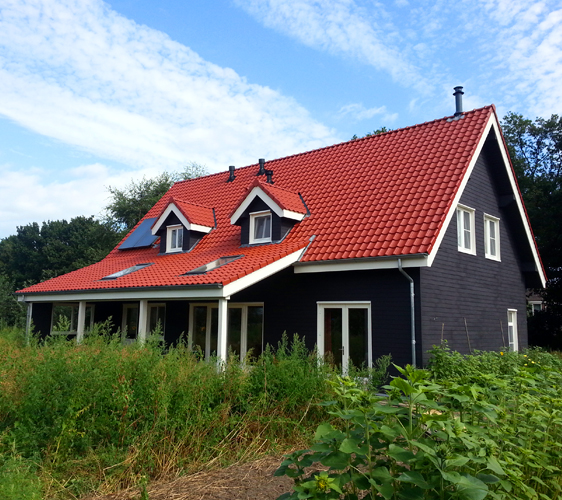
Residential house in Beringe NL 03

Residential house in Beringe (NL)

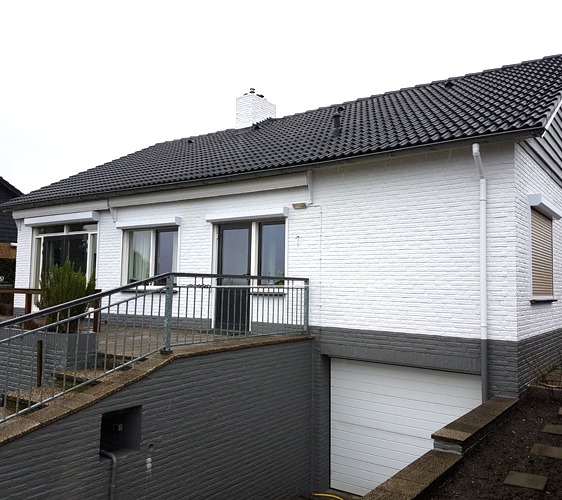
At the address Hoogstraat 47 in Beringe (L), the homeowner and master painter Thijs Martens coated the roof tiles in black and the façade in white in 2016. Consumption values for heating energy are not yet available, but there are initial experiences: “The uninsulated attic is no longer so very cold in winter” and “Our heating only needs 30 minutes to go from 17°C to 20°C when we arrive home. Before ClimateCoating® it took 1.5 hours”. The exterior walls are a double-shell construction with air gap and so-called half bricks as clinker shell. The significantly shorter heating times and slower cooling down have an energy-saving effect.

Three-family house in Zeuthen 01

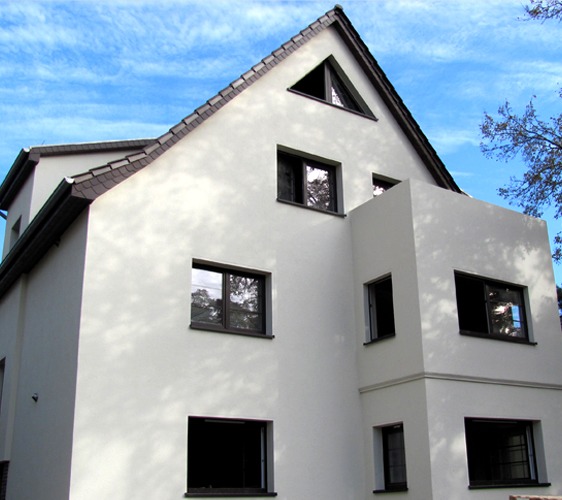
Three-family house in Zeuthen

The combination of an ETICS made of wood fibre insulation with ClimateCoating® created a comfortable climate and efficiency.

It started with a home inspection in mid-February 2010. In the context of the house purchase consultation by the expert of the house clinic® the house (built in 1936) was examined from the cellar to the roof. “Something can be made of it here,” affirmed the building expert of the house clinic® the owner-to-be in his vision to turn the old house into a three-family house according to modern standards.

In March, the new owner and builder commissioned DIMaGB Bauplanung with the planning services to obtain the building permit. Decisive for him were the DIMaGB building philosophy as well as the building-physical and constructive concepts, which are based on this and on the experience of a quarter of a century in construction.

The client followed the recommendation to upgrade the building envelope as part of the energy modernisation using wood fibre insulation and a coating with reflektive membrane technology. The façade was adapted to the new floor plans and fitted with an ETICS made of wood fibre insulation boards with a final coating of ClimateCoating® ThermoProtect.

The client chose a lightly tinted pastel shade from the colour palette of around 4,000 shades, which harmonises excellently with the dark window profiles and the engraved roof tiles.

Wood fibre insulating materials have decisive advantages over mineral wool and polystyrene: storage and insulating capacity, made from renewable raw materials, low-energy production, no hazardous waste on the facade, fully sorption-capable due to capillary conductivity.

Combining this wood-fibre ETICS with the thermo-ceramic membrane technology ClimateCoating® achieves maximum efficiency and economy. The facade is protected effectively and for a long time against driving rain, UV radiation, summer heat and freeze-thaw cycles. Prevention against the growth of algae and other microorganisms takes place here without fungicides and algaecides.

The infrared reflection (IR) within the membrane causes a reduction of the radiation to the cold sky and through a dew point shift the reduction of the moisture potential. The combination of the ClimateCoating® membrane with the storage and sorption capable substrate has an over-optimal effect.

The Haus-Klinik® expert confirms: “This is currently (2010) the ecological ETICS: energy-saving, sustainable, economical, efficient.” By the way: the three-family house was a multi-generation house.

The white house in Spremberg 01

The white house in Spremberg

Durability, comparison to a glaze

The White House in Washington D.C. has not (yet) been coated with ClimateCoating®. This is a wooden house in Spremberg near Cottbus. The photos are from November 2005, the report from 2006. The coating was applied in September 2000, when the building was in a pitiful condition. The surface of the wood was already heavily attacked because it had been exposed to the weather for years without protection.

Mosses, fungi and lichens had settled on the damp ground. Therefore, a thorough pre-treatment of the substrate was necessary. By coating with ClimateCoating® a considerable renovation success could be achieved. The wooden parts were actively dehumidified so that the structure could solidify again. In addition to the attractive appearance, it can be noted that since the coating with ClimateCoating® no infestation with microorganisms such as algae, fungi, lichens or mosses has occurred.

For the homeowners, the investment has paid off in full, especially since everyone can see how much effort the neighbour has to put into maintaining his brown glazed house (on the left in the picture) year after year. At the White House, on the other hand, maintenance of the facade coated with ClimateCoating® is not yet necessary. When coated with ClimateCoating®, every fibre structure of the wood can be recognised, so that the natural impression is retained. Nevertheless, with 0.3 mm a long-term protection is given. The protection against microorganisms is practically toxin-free, which distinguishes ClimateCoating® strikingly from other facade coatings. It is not only economical in use, but also ecological. No re-coating has been required since September 2000. (03.01.2006).

In the meantime there is also a report from Holland: The white house in Spaarndam

Here even after black coating of a wooden facade amazing experiences were made: The black house in Holland